

You've found a property in Witfield that looks like a promising investment.
The purchase price appears manageable. The complex looks attractive. There are rental listings nearby, and an agent may have suggested what the property could earn each month.
You start calculating the rental income.
It seems straightforward.
But before making an offer, there are other questions worth answering.
Possibly.
But that calculation is only the beginning.
The property might also have levies, rates, insurance, maintenance, vacancy periods and management expenses. If it is financed, the monthly bond instalment could exceed the amount left after those expenses.
And if it is a sectional-title unit, the financial condition of the body corporate may be as important as the appearance of the apartment.
Why do property investors consider Witfield?
Witfield is an established residential area within Boksburg, Gauteng.
Its location gives residents access to commercial and employment areas across the East Rand, with connections to Boksburg, Germiston, Kempton Park and the broader Johannesburg metropolitan area.
Schools, retail facilities and major transport routes are among the practical factors that can make a suburb attractive to residents.
Witfield also has different residential property types, including freestanding houses, flats, townhouses and units in larger sectional-title developments.
Location
Established access to the Boksburg and wider East Rand residential and employment markets.
Property Choice
Different property sizes and ownership structures allow investors to consider different strategies.
Potential Rental Market
Current advertised rentals provide evidence that properties are being offered to prospective tenants.
Market Comparisons
Local listings and transaction evidence can help establish an individual property's competitive position.
What do the advertised property figures tell investors?
ImmoAfrica's Witfield area guide provides a useful snapshot of apartment asking prices and advertised rentals.
These figures can help investors begin researching the area. They should not be confused with actual completed sales, signed lease rentals or verified investment returns.
Median across 49 active apartment listings.
Median advertised monthly apartment rental.
Median across 42 active house listings.
The figures come from separate groups of advertised properties. They are not necessarily comparable in size, condition, complex, location or ownership expenses.
A second rental-advertisement study from August 2026 reported typical advertised rents of approximately R7,000 for one-bedroom, one-bathroom units and R9,000 for two-bedroom, two-bathroom units in its Witfield sample.
Those rental figures are useful context, but a specific apartment still needs an assessment based on the same complex or genuinely comparable properties.
Sources: ImmoAfrica Witfield Area Guide (23 October 2026); Erfdata Witfield rental-advertisement study (24 August 2026). Advertised figures are time-sensitive, sample-dependent and not verified transaction results or guarantees of rental demand.
Which type of Witfield investment property should you consider?
An apartment, townhouse and freestanding house can have very different operating costs, maintenance responsibilities and tenant markets.
What happens to the rental income after the expenses?
Here is a hypothetical Witfield apartment purchase to demonstrate the difference between gross rental income, an operating surplus and cash flow after financing.
Witfield Apartment Investment
R90,000 annual potential rental divided by R650,000 purchase price, assuming twelve full months' rent and before any expenses.
R28,300 planned operating surplus divided by the R650,000 purchase price, after the modelled vacancy and operating allowances.
The calculation still excludes purchase and financing costs, letting costs not covered by the model, tax, extraordinary repairs, special levies and other property-specific obligations. It is a planning example, not an investment recommendation.
A high gross yield does not necessarily mean the property will pay for itself.
Suppose the investor purchases the hypothetical R650,000 apartment with a 10% deposit.
The loan would be R585,000 before any financed additional costs.
Using an illustrative interest rate of 11% and a 20-year repayment period, the bond instalment would be approximately R6,038 a month.
10% of the purchase price.
Assumed 11% rate and 20-year amortising loan.
This is the difference between the modelled R28,300 operating surplus and approximately R72,460 in annual bond payments. It excludes additional acquisition costs, taxes and extraordinary expenses.
That does not automatically mean buying the property is a bad decision.
Part of the bond instalment reduces the outstanding principal and may build equity. However, the investor must still fund the cash shortfall.
Whether that is acceptable depends on personal cash reserves, alternative investments, long-term plans and tolerance for risk.
The 11% rate, 10% deposit and 20-year loan are hypothetical assumptions, not a current mortgage quotation. Actual bond instalments depend on the lender's terms, approved rate, loan size and future interest-rate changes.
What happens when the investment doesn't go according to plan?
One of the most useful investment questions is whether the owner can survive an unfavourable period.
A tenant could move out. An unexpected repair could arise. The body corporate might approve additional expenditure, or the interest rate on a variable-rate mortgage could change.
The investor should not assume that every month will be fully occupied, fully paid and free of additional expenses.
Scenarios are illustrative, hold other model assumptions constant, and exclude loan payments and tax. They are not forecasts of Witfield vacancy rates, repairs or rental performance.
When you buy an apartment, you are also buying into the financial condition of its complex.
An individual apartment can look immaculate while the body corporate has serious financial or maintenance problems.
The unit's asking price and its monthly levy therefore tell only part of the story.
A prospective purchaser should investigate the scheme's financial position, operating costs, reserve funding, maintenance obligations and any relevant disputes or special levies.
Why a low levy isn't automatically good news
Low monthly levies may reflect effective cost control.
They may also reflect insufficient budgeting or maintenance that has been postponed.
A complex can require major spending on roofs, plumbing, electricity infrastructure, security, waterproofing or other common-property systems.
If the necessary money has not been accumulated, owners may face significant future contributions.
The financial condition of the body corporate should therefore form part of the decision to buy—not become something the investor investigates only after transfer.
The Sectional Titles Schemes Management Act provides for administrative and reserve funds, with prescribed governance and maintenance requirements.
Read the Sectional Titles Schemes Management Act ↗Availability and the right to obtain particular body corporate records depend on the statutory framework and the purchaser's position. Request information through the seller and authorised parties before signing, and seek professional assistance if material records are withheld or unexplained.
The deposit is not your entire upfront investment.
If you intend financing the purchase, you will ordinarily need to budget for more than the deposit.
Potential costs include the transfer attorney, bond registration, lender charges, initial repairs, compliance-related expenditure, tenant placement and cash reserves.
The transaction's VAT or transfer-duty treatment must also be considered.
A practical acquisition budget should include:
No transfer duty on qualifying property acquisitions up to R1,210,000.
Under SARS's rates effective from 1 April 2026, transfer duty is 0% on the value up to R1,210,000 where transfer duty applies.
This does not mean the property can be transferred at no cost. Transfer and bond registration fees, legal expenses and other charges may still be payable.
Where a transaction is subject to VAT rather than transfer duty, the relevant rules and pricing require separate consideration.
You are not buying Witfield's rental demand. You are buying one property's ability to attract tenants.
A suburb with rental advertisements and access to employment areas may be worth investigating.
But potential tenants compare properties individually.
They consider the rent, layout, parking, security, maintenance, access, utility arrangements and the alternatives within their budgets.
A one-bedroom apartment with limited parking may compete with a different group of properties from a three-bedroom freestanding house.
Even units within the same complex can achieve different rents because of floor area, condition, outlook or features.
Cash flow and taxable rental profit are different calculations.
Rental income is generally subject to income tax in South Africa, with qualifying expenditure potentially deductible in accordance with SARS rules.
For cash-flow purposes, the full bond instalment affects the money you need each month.
For tax purposes, however, the capital repayment portion is not ordinarily deductible as a rental expense, while qualifying bond interest may be.
Repairs and capital improvements also receive different tax treatment.
How Much Cash Is Left?
Rental income less cash operating costs, finance payments and other cash expenditure.
What Expenses Are Deductible?
Taxable rental income determined using qualifying deductions and applicable tax rules.
The tax position can also depend on whether the property is owned personally, jointly, through a company or another legal structure.
Investors should obtain personalised tax advice rather than assume that the cash-flow calculation gives the taxable profit or loss.
The purchase is only the beginning. The quality of the tenancy matters.
A property investment depends partly on the ability to attract and retain suitable tenants.
A prospective tenant's income, affordability, credit information and rental history may all be relevant to a fair application assessment.
Appropriate screening and written lease documentation can reduce avoidable uncertainty, but neither can guarantee future rental payments or property care.
Tenant Screening
Verify relevant identity, income, affordability and rental-history information lawfully.
Proper Lease
Record rent, deposits, responsibilities, notice provisions and other agreed terms.
Maintenance
Keep the property fit for its intended rental use and deal with repairs appropriately.
Rental Records
Monitor receipts, expenses, communication, inspections and lease dates.
Your Witfield investment due-diligence checklist.
The numbers on an advertisement are not sufficient information on which to make a major investment decision.
Use the checklist below to identify what still needs to be verified.
What about future capital growth?
Many property investors hope to earn rental income while the property's market value increases over time.
That combination is possible, but neither part of the return is guaranteed.
Property values depend on what future buyers are willing and able to pay. Market conditions can change due to interest rates, economic circumstances, local demand, competing supply and the condition of the property or development.
It is also possible for a property to earn acceptable rental income but take longer than expected to sell.
Rental Performance
Actual rent received, expenses, vacancies, financing and taxes during ownership.
Resale Performance
Selling price less the relevant acquisition, ownership, disposal and tax considerations.
Ask yourself one more question before purchasing.
If the entire investment depends on rapid future price growth, understand that you are taking a speculative position, not receiving a guaranteed return.
Sometimes the best property investment decision is not to buy.
An attractive property may still be unsuitable at the asking price.
An apparent bargain may be connected to significant repair needs, unresolved scheme obligations or an unrealistic rental estimate.
Financing conditions may make the monthly cash shortfall too large for your circumstances.
And some investments simply do not offer a reasonable relationship between the capital required and the risks involved.
Local property guidance before and after an investment purchase.
A+ Properties operates in the Boksburg and East Rand property market and provides both sales and rental services.
That allows investors and property owners to discuss the likely sales position and rental potential of a property alongside the responsibilities involved in letting it.
Where appropriate, A+ Properties can assist with rental-market guidance, advertising, tenant placement, screening, lease preparation and ongoing property management under an agreed service arrangement.
Local Context
Discuss comparable properties and relevant Witfield market conditions.
Rental Positioning
Consider what the specific property may reasonably achieve in rent.
Tenant Selection
Use structured screening to support fair and informed applicant decisions.
Management Options
Choose ongoing management or limited assistance to suit your circumstances.
Witfield can be worth investing in. That does not mean every Witfield property is worth buying.
The difference is often found in the details buyers overlook when they focus only on the purchase price and expected rent.
A well-positioned property, purchased at a defensible price and supported by sustainable rental demand, may deserve consideration.
The same property could become a poor investment if financed on unsuitable terms, burdened by excessive expenses or exposed to large unforeseen liabilities.
Location is part of the investment decision. Property condition, scheme finances, tenant demand, cash reserves and the owner's objectives are just as important.
Buy the numbers you can justify—not simply the investment story you would like to believe.
Questions about property investment in Witfield.
Is Witfield a good suburb for rental property investment?
Witfield may be worth considering because it is an established Boksburg residential area with access to the wider East Rand and a range of property types. Whether a purchase is a good investment depends on the individual property's price, rent, expenses, financing, condition and risks.
How much do apartments in Witfield cost?
ImmoAfrica reported a median advertised apartment price of R650,000 across 49 active listings in its 23 October 2026 snapshot. This is an asking-price sample, not the median completed sale price or a valuation of every Witfield apartment.
How much rent can an apartment in Witfield achieve?
ImmoAfrica reported a median advertised apartment rent of R7,950 per month on 23 October 2026. Actual achievable rent depends on the individual apartment, complex, size, condition, competition and tenant demand. Advertising does not guarantee the amount will be achieved.
What is a good rental yield in Witfield?
There is no single yield that establishes a good investment. Gross yield is annual potential rent divided by purchase price, but it excludes costs and often assumes full occupation. Investors should also assess the net operating position, financing, upfront capital, tax and risks.
Can a property have a high rental yield but negative cash flow?
Yes. Levies, rates, insurance, repairs, vacancy periods, administration and loan repayments can exceed the rental income remaining after expenses. Gross rental yield does not establish monthly cash flow.
Are sectional-title apartments safer investments than houses?
Not automatically. Different risks apply. Sectional-title investors should investigate the body corporate's financial position, maintenance plan, levies and special levies. Freestanding houses may have greater direct maintenance responsibilities. Each property must be assessed individually.
What body corporate documents should I see before buying?
Ask through the seller or authorised parties for recent financial statements, budgets, reserve fund information, relevant meeting minutes, levies, special-levy information, maintenance plans, scheme rules and material financial or legal matters. Obtain professional advice if important information remains unresolved.
Do I pay transfer duty when buying a Witfield property?
Under SARS's rates effective from 1 April 2026, acquisitions up to R1,210,000 attract no transfer duty where transfer duty applies. Legal transfer fees, bond registration and other purchase costs may still be payable. VAT treatment can differ for particular transactions.
Is rental income taxable in South Africa?
Rental income is generally taxable, with qualifying deductions allowed under applicable SARS rules. The capital portion of a mortgage repayment is not ordinarily deductible, while qualifying interest may be. Investors should obtain tax advice based on their ownership structure and circumstances.
Will Witfield property prices definitely increase?
No. Property values may increase, stagnate or decrease. Future capital growth depends on property-specific and wider market circumstances and cannot be guaranteed.
Can A+ Properties find and screen tenants for my investment property?
A+ Properties offers rental marketing, tenant placement and standalone Tenant Screening & Risk Assessment. Screening helps inform the selection decision but does not guarantee future tenant performance.
Can A+ Properties manage my Witfield investment property?
Yes. A+ Properties offers ongoing rental management as well as placement-only and selected landlord support services. The appropriate service depends on the owner's needs and the agreed management mandate.
Follow A+ Properties for more property investment and rental guidance.
We publish guides on buying, selling, tenant selection, rental administration, market conditions and responsible property ownership.
Add A+ Properties to Google Preferred Sources to help Google highlight relevant articles from our website in supported Search experiences.
If the Google button does not appear:
Add A+ Properties on Google →More useful guides for Witfield property investors.
Witfield Property Market Report
Explore the factors influencing property prices, supply and demand in the area.
Houses for Sale in Witfield
Understand the area's property types and important considerations for buyers.
What Is My Property Worth in Witfield?
Understand asking prices, completed sales and property-specific value.
How to Rent Out Property in Witfield
Learn about pricing, marketing, applications, leasing and management.
Tenant Screening in Witfield
Understand affordability, identity, credit, references and fair applicant assessment.
Property Management in Witfield
See how an agency can assist with rental administration and landlord responsibilities.
Should You Sell or Rent in Witfield?
Compare releasing capital with retaining a property for rental income.
Rental Deposits in South Africa
Understand landlord responsibilities for deposit records, interest and refunds.
A+ Properties Landlord Centre
Explore screening, tenant placement and ongoing property management services.
Considering an investment property in Witfield? Start by checking the rental numbers.
A+ Properties can discuss the property's local market context, potential rental positioning, tenant placement and management requirements. You can then combine that information with your own financing, expense budget and professional due diligence before deciding whether to purchase.
Witfield market evidence: The October 2026 apartment and house figures are from the ImmoAfrica Witfield Area Guide and describe advertised asking prices and rents in its specific listing sample. The August 2026 rental comparisons are from Erfdata's Witfield rental-advertisement study. They do not establish completed sale values, actual rental contracts, market-wide vacancy rates, future price movements or achievable yields for a particular property.
Investment illustration: The R650,000 purchase price, R7,500 monthly rent, 11 occupied months, levy costs, rates, maintenance provision, insurance allowance and management allowance are hypothetical assumptions. The R28,300 operating surplus and associated yields are planning examples, not forecasts or actual Witfield investment performance. Additional acquisition, letting, financing, tax, capital-repair and special-levy expenses may apply.
Financing illustration: The 10% deposit, R585,000 loan, 11% annual interest and 20-year amortisation assumptions are illustrative. The calculated monthly instalment is approximately R6,038. Actual loan terms, interest rates, cash contributions and lending eligibility will differ. Bond repayments include interest and capital, and capital repayment is not the same as an operating expense.
Rental income and tax: Rental income is generally taxable in South Africa, with relevant qualifying deductions subject to SARS rules. Mortgage capital repayments are not ordinarily deductible from rental income. Tax treatment depends on ownership, applicable legislation and individual circumstances.
Transfer duty: The transfer-duty information refers to SARS rates effective from 1 April 2026. Zero transfer duty at the stated threshold does not eliminate conveyancing, bond registration and other acquisition costs. VAT treatment may apply to particular transactions instead of transfer duty.
Sectional title: Investors should independently assess the financial position, levies, rules, maintenance plans and liabilities of any body corporate before buying. The statutory rights to records and their availability depend on the applicable legal process and the person's capacity or authority.
Market risk: Rental income, tenant payment, vacancy periods, interest rates, maintenance expenses, body corporate levies and property values can change. Neither rental income nor future capital growth is guaranteed.
A+ Properties: A+ Properties offers local property guidance, rental marketing, tenant screening, placement, leasing support and property management within the scope of the relevant agreement. An estate-agency Comparative Market Analysis or rental assessment is not a formal professional valuation or investment guarantee.
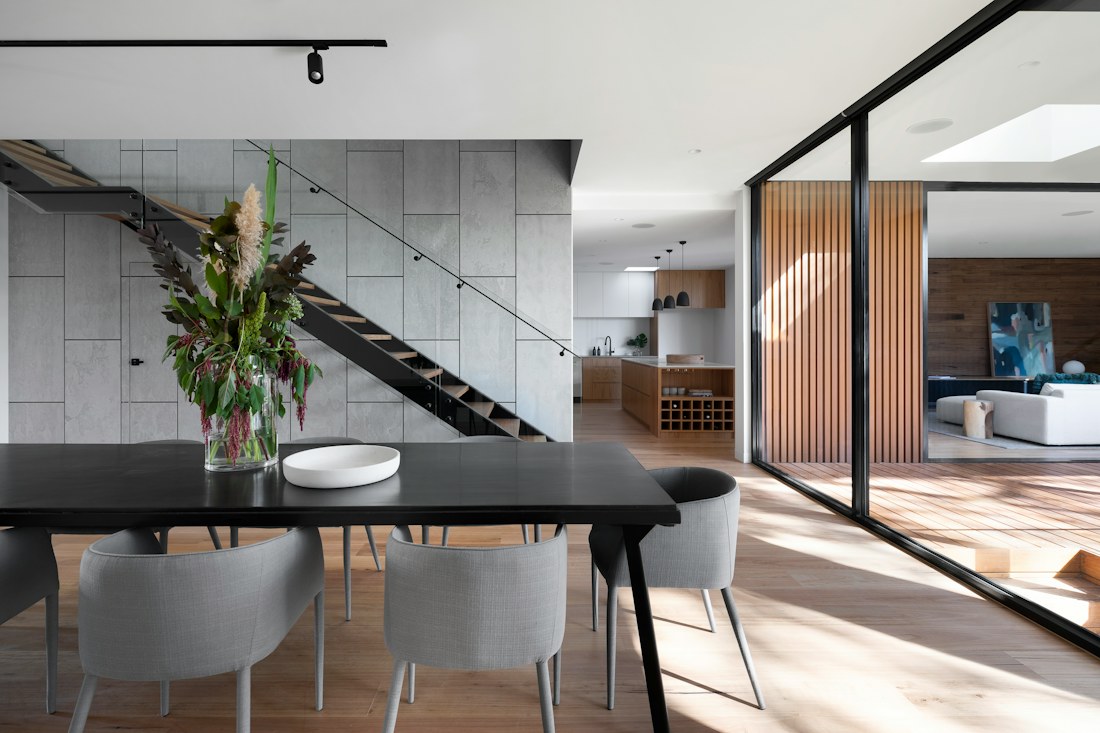
Photography: The Unsplash photograph is illustrative and is not a verified Witfield property or A+ Properties listing. The investment illustration and explanatory graphics are editorial examples.
Google Preferred Sources: The Google button requires the website editor to permit Google's JavaScript. The direct Google link is provided as a fallback.